
Chasing the Blue Dragonfly
Unai Elorriaga's moving novel "Plants Don't Drink Coffee


Today I’ve got a book that you really ought to read.
First, however, three utterly shameless but mercifully brief plugs!:
I’ll post again in a few days with the next installment in our ongoing read-along of Plato’s Republic. This week: pages 78-101 in the Bloom translation (Stephanus numbers 399e-424b).
If you haven’t checked out the Microstack recently, I thought today’s post was pretty good. Check it out!
Next Monday will be the first post in a very, very slow read-along of Thomas Malory’s Le Morte D’Arthur, the classic collection of legends about King Arthur. If you’re interested, that requires a separate (free) subscription; details here.
Since I started “From My Bookshelf” about a year and a half ago, one of my real pleasures has been stumbling upon an expected gem every now and then—a book I’d been unaware of but thought was something special—and being able to share it with all of you. Examples include Henri Bosco’s The Child and the River, Willa Cather’s novella Neighbour Rosicky, Miklós Bánffy’s short story collection The Enchanted Night, or Banine’s Days in the Caucasus (a post in two parts, with part two here).
I’ve got another of those books for you today.
A couple of weeks ago, I mentioned that I had begun reading a book called Plants Don’t Drink Coffee, by the Basque author Unai Elorriaga, and translated into English by Amaia Gabantxo. I finished it last Friday. It is worth your time.
The central character of Plants Don’t Drink Coffee is a young boy named Tomas. His age is unclear, perhaps 7 or 8 years. Much of the book, though by no means all, is told from his youthful perspective, and Elorriaga does a wonderful job of capturing a child’s thought process—circling around, moving from one idea to another in a kind of free association, returning to certain key ideas or concerns, puzzling over some only partially comprehended concept, trying to make sense of the world and his place in it.
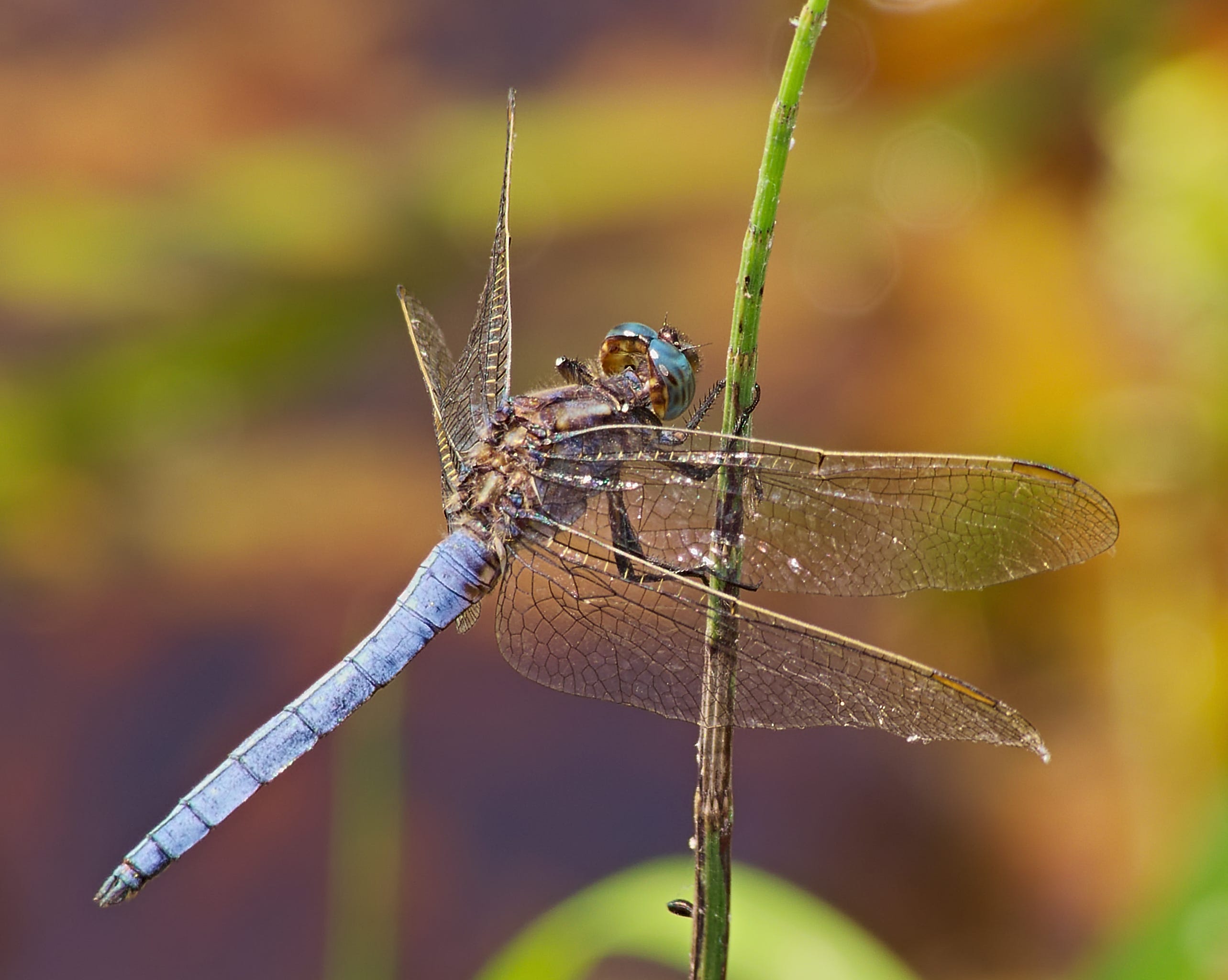
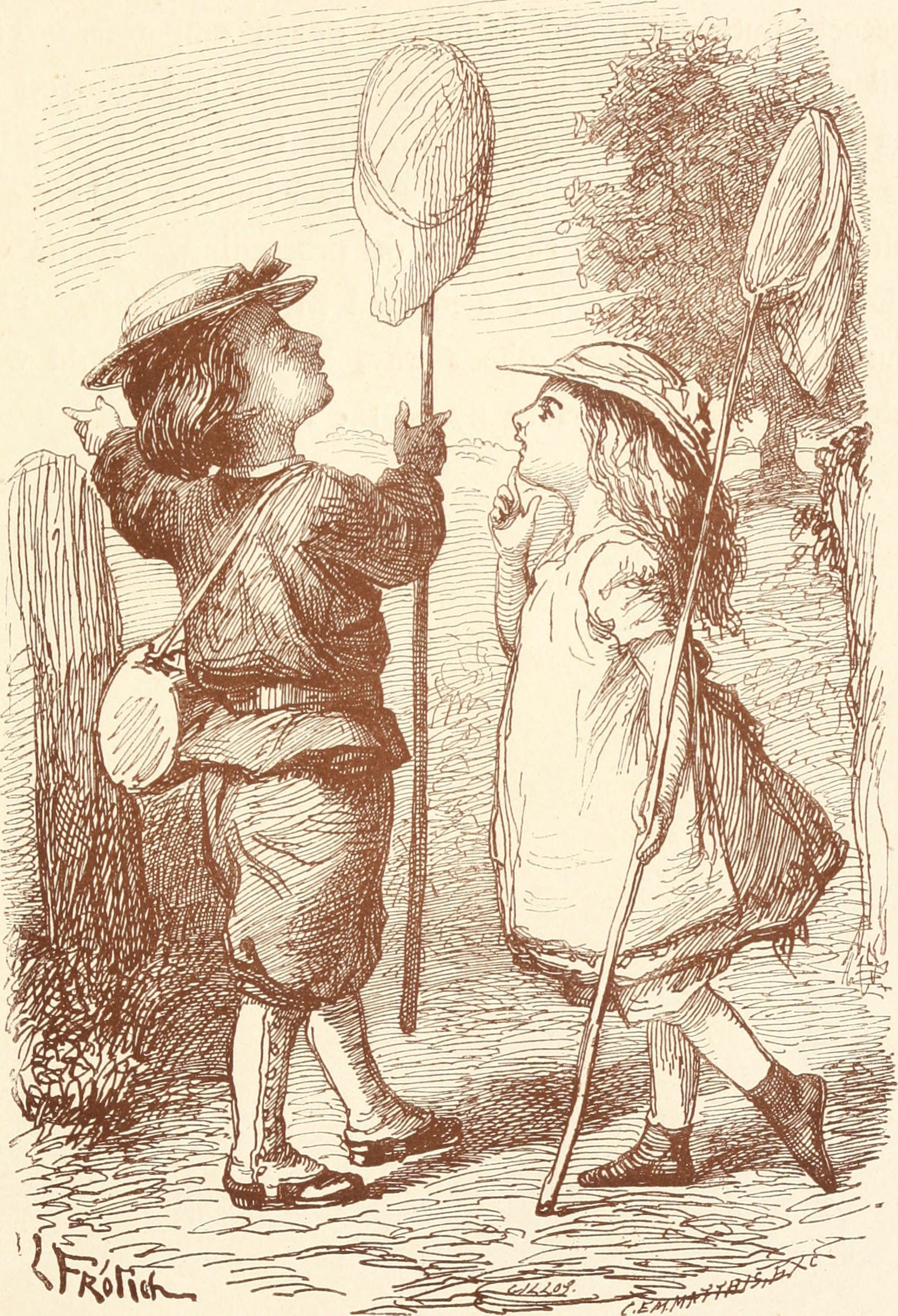
Tomas is staying with his Aunt Martina and Uncle Abel because his father is hospitalized with an undisclosed illness. He spends much of his time with his older cousins, Mateo and Iñes. Iñes takes him searching for insects that she catches and adds to her growing collection of butterflies, beetles, and dragonflies. They especially want to catch a particular blue dragonfly, one that is supposedly rare— “there are very few blue dragonflies in the world, nine or seven or fewer still…. That’s why the most important thing in the world now is to catch the dragonfly.” Tomas has an even more special reason for wanting to catch the blue dragonfly:
Iñes told me something no one else in the world knows. She told me a secret, a big one. This is what Iñes told me and her eyes were full of mystery when she said it: “The person who catches the blue dragonfly…” she said, and then she went quiet. And then she did this thing with her lips, and turned them upwards and downwards, and that always means she is about to reveal a mystery, a big one, and then she added: “…becomes the most intelligent person in the world.” That’s what she told me. And this is a secret that almost no one in the world knows and it’s incredible. But it’s true. Iñes told me.
Tomas is certain that if he can catch the dragonfly, he will become the most intelligent person in the world—as smart as a doctor. It is telling that Tomas automatically assumes doctors are the smartest people in the world. His father, it appears, is on his mind more than he realizes.
Elorriaga gradually assembles a lovable cast of characters around Tomas. Three others become central; a certain mystery is associated with each of them. We first meet Simon, another of Tomas’s uncles. For reasons that are not initially clear, Simon, together with his boyhood friend Gur, is determined to create a rugby field in their soccer-loving town. At night, they scale the wall surrounding a local golf course and, avoiding the ineffective guard, measure off the field—they need exactly 144 meters by 80 meters—and begin painting the lines. The goalposts they plan to construct using spare railroad ties.
The other two central characters emerge more gradually; we do not immediately realize that they play such important roles. One of them, in fact, is dead. Mateo is at the library one day—he goes there routinely to steal books—and meets a retired librarian. When the old man learns who the boy is, he tells him that he remembers his aitite, or grandfather, Julian. Aitite Julian was something of a practical joker—“a bit of an anarchist”—as well as a first-rate carpenter. He once designed a large armoire for a wealthy local woman who requested that he depict the fifteen mysteries of the Rosary on it. In fulfilling her commission, he secretly added a sixteenth mystery… which she never even noticed.
But what really captures Mateo’s interest is the news that Julian was such a great carpenter that he once took part in a competition, held right there in town in 1927, to see who was the best carpenter in all Europe. Mateo has never heard this about his aitite before, and he is fascinated by it. The old librarian, unfortunately, can tell him no more about the competition, and not many people are around any longer who might remember a contest from way back in 1927.
The fourth character is an old woman named Piedad. She is friends with Tomas’s aunts, and she visits them often in the little workshop where they earn a living as seamstresses. Piedad’s conversation circles around one thing in particular: a famous architect, now dead, named Samuel Mud, obviously the great love of her life. There is “some kind of mystery going on with Piedad,” thinks Tomas.
I think that’s Piedad’s mystery, that she knew Samuel Mud. Or that she was Samuel Mud’s friend. Because it’s important to know important people, because important people are always special. Aunt Martina says that. But I think Piedad’s real mystery is a different one. I think Piedad’s real mystery is the one Aunt Rosa often mentions: why Piedad and Samuel didn’t get married.
The women all want to know about this, dropping frequents hints as they try to tempt Piedad into revealing her secret. We gradually learn that there was evidently some important reason why the two never married. But will Piedad ever reveal what it was?
_(14755714685).jpg)
Each of these four characters pursues a dream and is marked by the longing for something just out of reach. Tomas is chasing his blue dragonfly (and also, subconsciously, hoping for his father’s return); Simon wants his rugby field; aitite Julian is competing to be the best carpenter in Europe; Piedad relives her years with Samuel and dreams of what might have been.
And there is that aura of mystery surrounding each of the four and his or her quest. We don’t know whether the supposedly rare blue dragonfly is actually anywhere to be found, or whether Tomas’s father will return to health. It isn’t clear exactly why Simon wants to create a rugby field on a golf course or thinks that this is so important. Mateo searches in vain for someone who can tell him the outcome of aitite Julian’s carpentry competition, while we wonder whether the competition ever really took place at all. And Piedad carries around a book she has found containing Samuel Mud’s letters, hoping that perhaps she is mentioned somewhere in them, as we readers ask ourselves what the important reason might have been that prevented the two from marrying. The novel pursues these different questions, interweaving them with each other, as Elorriaga skillfully reveals just a bit more, and a bit more, not quite resolving the mysteries, but dangling them before us as the novel moves toward a conclusion.
The book’s final four chapters, each of which is designated a “last couplet” devoted to one of these four characters, resolve the interwoven subplots. What follows, therefore, might be taken as a series of spoilers. Only one of them, I think, is really a spoiler of importance; and even that, should you read the novel, will probably not come as a surprise by the time you reach its end. You are forewarned, however! When I come to the fourth and most important of these potential mini-spoilers, I’ll give you one more alert, just in case.
The first member of our quartet to have her mysteries revealed is Piedad—who has, by now, learned that she was in fact mentioned in Samuel’s letters, when he wrote about her to his friend and explained that there was a very important reason the two had not gotten married… but did not say what it was. Late one morning Piedad sits down to write a letter to the long-dead Samuel—as she does every morning, in fact, and has been doing every morning since April 5, 1940, continuing the practice even after Samuel’s death. Her daily routine is unchanging: she writes sitting at the same table, with photographs of Samuel and her sister in front of her, and replicating each morning the same accidental iodine stain on her elbow that had been there when she wrote her very first letter those many years ago.
Today she writes to Samuel that she has finally told her friends Rosa and Martina why they had never gotten married. “Rosa and Martina have wanted to know for a long time,” she writes. “They never really asked me, but they’ve wanted to know for a long time…. And I never told them until now.” As she puts down her pen, she recalls a long-ago conversation, from 1947, when she was 27 years old and Samuel 37. He had explained to her that his mother had died young, his father had died young, his aunt, his uncle, his grandparents—everyone in his family had died young. He was certain that the same fate awaited him:
“I’ve calculated that I will die at forty-one or forty-two at the latest. That’s my inheritance, Piedad. Five years at most. Do you know how many days five years are?”
“How many?”
“1,825 days. How can we get married, Piedad? That’d be a very sad wedding.”
“A very sad wedding?”
“I will have already started dying on the day we marry, Piedad. Ours would be a very sad family.”
In fact, we know, Samuel will live to the age of seventy-two.
This melancholy remembrance reorients our perspective on the novel’s events by forcing us to ask whether we have been reading it in the right way. All along, we want to know what will happen, how the various stories will end. Will we learn why Samuel and Piedad never married? Will Simon get his rugby field, and will we learn why it matters so much to him? Did aitite Julian win his carpentry competition? Will Tomas catch the blue dragonfly?
But perhaps we are asking the wrong questions. Samuel Mud did not wonder how his story would end. He was certain that he knew the ending already. And because he was so fixated on that end, he deprived himself and Piedad of what might have been many happy years together. Are we making a mistake by focusing on the end, on what will happen, rather than on what is happening right now, not only in the story but also in our own lives? Indeed, we might carry that thought a step further. For although he predicted the timing incorrectly, Samuel was not wrong about how his story would ultimately end. We all already know how his story will end, and Piedad’s story, and our own, and everyone’s. They all end in death. To live our lives only in the shadow of that ending, Elorriaga seems to suggest, is to miss all that happens in the meantime, to miss life itself.
Julian is next. Mateo finally finds someone, an extremely old priest named Don Juan, who remembers the boy’s grandfather and the carpentry competition, which turns out to have had only two participants. Julian’s rival was a Welsh carpenter. When he arrived in town for the contest, the two set up their workshop inside the local church, beneath the choir, the only place large enough for the giant objects they planned to build. So many people came to watch them that they couldn’t work properly, so they hung a big curtain to conceal themselves from the onlookers. Don Juan regales Mateo with all sorts of details from the event, until finally the impatient boy asks him, “Who won the competition?” This provokes an unexpected outburst from the aged priest:
The ‘winner’? What does that word mean, señe? ‘Winners and losers.’ Is that what you think of these days? You really haven’t taken after your aitite much. And what are you, son, a winner or a loser? And me? And Don Fermin? Was Jesse Owens a winner? And Hitler, what was Hitler? And Hitchcock? And a man with a piece of almond stuck between his teeth, is he a winner or a loser? And when he gets it out, what is he? A winner?
Like Piedad’s recollection, this bizarre tirade forces us to ask ourselves what we focus our attention on. If we are interested only in knowing who “wins,” will we fail even to notice ordinary people, perhaps people like Mateo himself? A person who appears to be a “winner” at one time may not appear so at another. Focusing on who “wins” is another way of fixating on the end of a story. Don Juan indicates how this can mislead us. If I end the story with that piece of almond stuck between my teeth, I look like a loser. If we run the film another five minutes, and I get it out, I look like a winner. If we step back from the question of winners and losers, however, we can appreciate the whole story, from start to finish.
This is also the lesson of Julian’s competition. In fact, when the two carpenters finally finished their work, and the judges arrived to inspect it, the result was not at all what people had expected:
And the curtain did come up, said Don Juan. And surprisingly there was only one piece behind it. Do you realize, señe; they made one piece between the two of them. Instead of making one each. It was a masterpiece though; the best work of carpentry in Europe, no doubt. But there was nothing to judge there. For a competition to work you need to be able to choose between two pieces, and they had made one between them.
Had Samuel Mud not been so fixated on the end, he and Piedad could have spent their lives together, perhaps creating a marital masterpiece. Julian and his congenial Welsh counterpart ignored the judges’ desire for a clear end with definite winners and losers. But by doing so they made their own masterpiece, the best piece of carpentry in Europe.
Uncle Simon is third. He is building his rugby field, we learn, in order to host an international rugby game in a town that has no rugby field because almost no one is interested in rugby. His life’s dream had long been to be a linesman in a real rugby match. After repeated pleas, the Irish Rugby Federation had finally agreed to let him serve as linesman for a “friendly” match between Ireland and Wales held as an annual event to support a historic rugby field no longer in official use. After the match, Simon had persuaded the two teams that they should come to his town, where people desperately needed to experience real rugby, and play an exhibition match there. Amazingly, they agreed.
So on the day of the match, dozens of people, including the Irish and Welsh rugby teams, march through the streets of town carrying ladders and railroad ties and heading for the golf course. They set the ladders up on either side of the wall so that spectators can enter the grounds. Then they head off with the railroad ties to erect their goalposts and get the match underway. Several hundred people come to watch. A pair of golfers discovers them and alerts the guard; he in turn alerts a couple of policemen; they then call for reinforcements. Joyful chaos ensues. The police look on helplessly as the match rushes to its finish.
The rugby match ended as [the police] were beginning to surround the golf course. Wales won 27 to 25. And people cheered the players massively. And the players cheered the people back. And they even cheered the police. And afterwards the players mingled with the crowd, and there were hugs and back slaps and high fives, and they all headed to the stone wall together. And the police didn’t know what to do; they didn’t know who to arrest or who to let go, because they couldn’t arrest more than three hundred people.
Afterwards, everyone, players and spectators alike, head down to the beach, singing songs all the way. They have a big party and swim for hours.
Like the carpentry competition that isn’t really a competition, this is a rugby match that isn’t really a match—just another “friendly” match, where nobody particularly cares who wins, and where winning isn’t really even the point. The match, to be sure, has a definite end—in fact, the narrator even provides a bit of a countdown, telling us what happens at minute 23 of the first half, or minute 17 of the second half, and so on—but it hardly matters. One barely even notices the match’s end, as the excitement of play flows right into the excitement of the post-game celebration.
Finally we reach the “last couplet” about Tomas. And here is the promised warning: this will be our final spoiler, although, as I said, I don’t think the book’s end really comes as a surprise. Personally, if I were you, I would read on! But if you want to preserve the possibility of surprise, scroll on down to the next “subscribe” button below, and begin reading again after that.
“We finally caught it today,” begins the novel’s last chapter.
This morning, next to the soccer fields, at the ponds. The blue dragonfly. We caught the blue dragonfly at the ponds today. And now it’s nighttime and I’m the most intelligent person in the world, like a doctor. Because we caught the blue dragonfly. Because that’s what happens when you catch the blue dragonfly, Iñes told me. But it doesn’t happen immediately. You don’t become the most intelligent person in the world right after you catch the blue dragonfly. It’s not like that. Because lots of things happened today, in the morning and in the afternoon…. And now it’s nighttime and I’m the most intelligent person in the world, now I am, not in the morning when we caught the dragonfly. Now. And the dragonfly is in a glass jar now, I have it between my knees.
Tomas did not immediately become the most intelligent person in the world, but he is now. Obviously something else of importance has happened in the course of his busy day.
Over the next half-dozen pages, Elorriaga fills in the details of Tomas’s day. Very subtly, very tenderly, and always returning us to the symbolic dragonfly, he reveals that what we feared all along might happen has indeed happened. That morning the telephone rang early. Too early. Aunt Martina left the house, followed later by Uncle Abel. Iñes took Tomas out insect-hunting—in the morning, although normally they always go after lunch. And they were finally successful. They caught the blue dragonfly and put it inside the glass jar, where it would every now and then flutter its wings, going “trzzz.”
Tomas decides that he really ought to show his father the dragonfly, because “he likes things like that a lot.” He walks across town to his own house, where his dad has been released from the hospital. When he arrives, “the dragonfly went trzzz again, but it was an odd trzzz.” Instead of his mother, he finds his Uncle Pedro and Aunt Rosa. Reluctantly, they reveal to him the truth, in a passage both lovely and deeply moving:
[Aunt Rosa said,] Tell the child the truth. And Uncle Pedro tapped the floor with his cane and told me Your dad died this morning, señe. And I didn’t know where to look and I looked at the dragonfly, and it didn’t go trzzz anymore and its color was gone. And I shook the jar, but the dragonfly didn’t go trzzz. And I shook the jar again, quicker, and one of the dragonfly’s wings broke, but it didn’t go trzzz and it didn’t do anything. And I saw then that dragonflies die too. And I saw then that dads die too, like dragonflies. And moms as well. And children.
You have probably never teared up while reading about a blue dragonfly caught in a glass jar. But you will while reading Plants Don’t Drink Coffee.
Now Tomas is the most intelligent person in the world, “like a doctor,” because “lots of things happened today.” But two things most of all:
Especially because I caught the blue dragonfly, and especially because Dad died. Because this is important. Because otherwise we would have gone to Madagascar. And now I know we won’t go to Madagascar. And we won’t go anywhere. Dad and I. Not even swimming.
We know how all of our stories will end. Not when, but how. But that need not make us “losers.” Between now and then is all of life. Between now and then we can play the game, together—a friendly match. If we play it well, we are all winners, regardless of the end.
Rarely have I read a book that ended so sadly but that was as full of joy. Plants Don’t Drink Coffee is a delightful book, full of whimsy, love, friendship, humor, and appealingly eccentric characters. Full of life.
I had never before heard of Unai Elorriaga. I had probably never before read a book translated from the Basque. But I’m glad I read this one. If by chance you find yourself inspired to give it a try also, come back and let me know what you thought.
As always, thanks for reading, and I’ll see you next time for another installment From My Bookshelf. (And for more of Plato’s Republic!)